

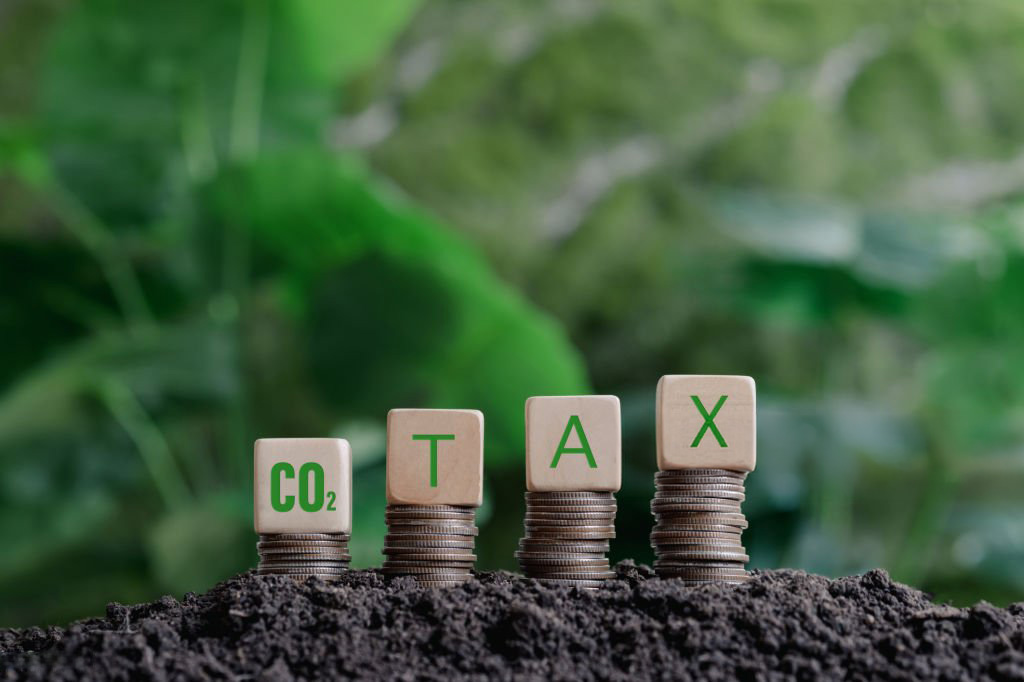
Malaysia’s carbon tax is no longer a distant policy discussion, it is a confirmed shift in the country’s economic and regulatory landscape.
Recent announcements tied to the National Climate Change Bill (RUU PIN) make it clear that the government is moving toward a structured carbon pricing system built on measurement and accountability. Central to this is the introduction of a Measurement, Reporting and Verification (MRV) framework, which will require companies to quantify and report their greenhouse gas emissions in a standardised way.
Because before carbon can be taxed, it must first be measured, verified, and attributed to specific operations, effectively turning emissions into a trackable financial metric.
The Carbon Tax: From Policy to Pressure
While the exact tax rate has yet to be announced, one thing is clear:
Emissions will soon carry a direct cost.
According to analysts, this introduces a new cost layer into business operations, particularly for companies with high carbon footprints, potentially impacting margins and long-term profitability. At the same time, mandatory sustainability disclosures are already in effect for large companies, reinforcing that transparency and accountability are no longer optional.
Which Industries Will Be Hit First?
The initial rollout of Malaysia’s carbon tax is expected to focus on high-emission, energy-intensive sectors, including:
🔧 Core Target Sectors (Phase 1)
- Iron & steel
- Energy & power generation
🏗️ Likely Expansion Sectors (Phase 2 and beyond)
- Cement
- Aluminium
- Manufacturing & heavy industry
- Fertilisers and chemicals
- Logistics and large-scale industrial operations
These industries are targeted because they contribute a disproportionate share of emissions and therefore represent the biggest opportunity for reduction. But the impact won’t stop there.
Why This Changes the Business Equation?
Historically, sustainability initiatives were often seen as:
- CSR-driven
- Brand-enhancing
- “Nice-to-have”
The carbon tax flips that narrative. It introduces a simple equation: More emissions = higher operating cost. This fundamentally shifts how companies evaluate investments. Suddenly, reducing emissions is not just about ESG, it’s about cost control, competitiveness, and survival.
The Mechanics: How Solar Lowers Carbon Tax
Under the MRV-driven system, emissions will be calculated based on actual energy usage and operational data.
For most businesses, emissions come from:
- Electricity consumption (Scope 2)
- Fuel usage (Scope 1)
- Logistics and supply chain
Solar directly addresses electricity-related emissions, which are among the easiest to measure and verify under MRV frameworks.
Because Malaysia’s grid remains largely fossil-fuel-based, every unit of solar energy generated:
- Replaces grid electricity
- Lowers reported emissions
- Directly reduces taxable carbon
A Practical Illustration
Consider a manufacturing facility:
- Annual electricity consumption: 10,000 MWh
- Emission factor: ~0.69 tCO₂/MWh
👉 Emissions from electricity: 6,900 tCO₂/year
If solar is installed to offset 30% of consumption:
- Solar generation: 3,000 MWh
- New emissions: 4,830 tCO₂
👉 Emissions reduced: 2,070 tCO₂
How Much of Your Carbon Tax Can Solar Reduce?
This depends on your emission profile.
In many industrial operations:
- 30%–60% of emissions come from electricity
- The rest comes from fuel and process-related sources
As a result: Solar can typically reduce 20%–50% of a company’s total carbon tax exposure
Policy Alignment: Why Acting Early Matters
Malaysia’s carbon tax is part of a broader shift toward:
- A regulated carbon market
- Standardised emissions reporting
- Net-zero targets by 2050
With MRV systems forming the backbone of enforcement, businesses that reduce emissions early will be better positioned to:
- Lower compliance risk
- Manage future tax exposure
- Maintain competitiveness in both domestic and export markets
Solar doesn’t give you a tax break, it reduces the tax you have to pay. Under a system where emissions are measured, verified, and priced, that reduction becomes both visible and financially significant.
Speak to us now to find out how to go solar.