Key Takeaways
Solar ATAP is Malaysia’s rooftop solar programme introduced on 1 January 2026, allowing eligible homeowners to use solar electricity and receive credits for surplus energy exported to TNB.
Domestic installations generally allow 5 kW for single-phase and 15 kW for three-phase supply before additional connection checks are required.
Export credits are based on the applicable domestic Energy Charge and must be used within the same billing period.
Eligible homeowners may qualify for the SuRIA Home rebate of RM600 per kWac, capped at RM3,000, subject to programme availability and conditions.
System sizing should consider daytime electricity consumption, roof suitability, approved capacity and long-term household needs.
Solar ATAP, short for Solar Accelerated Transition Action Programme, allows eligible Malaysian homeowners to generate rooftop solar electricity, use it at home and receive bill credits for qualifying surplus electricity exported to the grid.
Introduced on 1 January 2026, the programme continues Malaysia’s approach to residential rooftop solar following the earlier Net Energy Metering (NEM) programme.
However, installing solar panels does not mean your electricity bill automatically disappears. Understanding how your home consumes and exports electricity is essential before deciding on a suitable solar company in malaysia.
How Does Solar ATAP Work for Malaysian Homeowners?
Solar ATAP prioritises self-consumption, meaning your home uses its own solar electricity before relying on electricity supplied by TNB.
The process is straightforward:
Generate electricity: Rooftop solar panels produce electricity during daylight hours.
Use it at home: Your appliances consume the solar electricity available at that moment.
Export surplus electricity: Unused generation may flow into the TNB grid, subject to programme requirements.
Import electricity: TNB supplies electricity when solar generation cannot meet household demand.
Receive eligible credits: Qualifying exported electricity is reflected as credits on the electricity bill.
For example, your home may consume electricity from rooftop solar during the afternoon while still purchasing electricity from TNB at night.
Solar ATAP therefore combines two potential benefits: reducing the electricity purchased from the grid and receiving credits for eligible surplus generation.
Who Is Eligible for Solar ATAP in Malaysia?
Solar ATAP primarily serves eligible electricity consumers in Peninsular Malaysia connected to TNB.
For homeowners, the basic eligibility considerations include:
Being a registered TNB electricity consumer.
Having an eligible domestic electricity account.
Installing solar PV within the applicable premises.
Meeting rooftop, electrical and grid-connection requirements.
Not participating simultaneously in an incompatible existing solar programme.
Not operating under an excluded multi-tenant electricity arrangement.
Homeowners with existing NEM installations are not automatically disqualified. However, joining Solar ATAP requires terminating the relevant existing contract and satisfying the programme’s conditions.
Importantly, your property must also be technically suitable. Eligibility alone does not guarantee approval of the proposed installation capacity.
How Much Solar Capacity Can Your Home Install?
One of the most important Solar ATAP requirements concerns your property’s electrical supply.
The Energy Commission’s guidelines establish these standard domestic capacity thresholds:
| Domestic Electricity Supply | Standard Capacity Threshold | Additional Requirement |
|---|---|---|
| Single-phase | Up to 5 kW | CCC required above 5 kW |
| Three-phase | Up to 15 kW | CCC required above 15 kW |
A Connection Confirmation Check (CCC) assesses whether the proposed larger installation can connect safely to the electricity network.
SEDA publishes a RM1,000 CCC study fee for domestic installations exceeding either applicable threshold. Approval is not automatic.
Does a Bigger Solar System Always Mean Better Savings?
Not necessarily.
A larger system can generate more electricity, but households with low daytime consumption may export a significant portion of that energy instead of using it directly.
Consider two homes with similar monthly electricity consumption. One uses air-conditioning, water pumps and appliances throughout the afternoon. The other uses most of its electricity after sunset.
The first household may use more solar generation immediately, while the second may depend more heavily on export credits and nighttime grid electricity.
Before proceeding with residential solar panel installation, homeowners should assess their electricity bills, daytime usage, roof conditions and available electrical capacity.
Also note that panel capacity measured in kWp (DC) and inverter output measured in kW (AC) are different technical ratings. Final capacity must be checked against the programme’s approved measurement requirements.
How Does Solar ATAP Affect Your TNB Electricity Bill?
Solar ATAP savings come from two different mechanisms.
Self-consumption reduces the amount of grid electricity purchased when your home uses solar electricity directly.
Export credits provide an offset for eligible surplus energy supplied to the grid.
The Energy Commission specifies that domestic export credits are valued using the applicable Energy Charge, not the Average System Marginal Price used for non-domestic consumers.
A Simple Monthly Solar ATAP Example
Consider the following illustrative household energy profile:
| Electricity Activity | Monthly Amount |
|---|---|
| Total solar electricity generated | 600 kWh |
| Solar electricity consumed directly | 380 kWh |
| Surplus solar electricity exported | 220 kWh |
| Electricity imported from TNB | 420 kWh |
In this example, the household directly uses 380 kWh of electricity that it would otherwise need to obtain from the grid.
It also exports 220 kWh, potentially generating bill credits.
For illustration only, if all 220 exported kWh qualified for an assumed credit value of RM0.30/kWh, the export-credit value would be:
220 kWh × RM0.30 = RM66
This is not an official Solar ATAP credit rate or a prediction of the household’s savings. Actual credits depend on the applicable Energy Charge, qualifying export quantity and billing rules.
Crucially, the credit cannot offset every component of the electricity bill. For example, it does not offset the Automatic Fuel Adjustment (AFA).
Can Unused Solar ATAP Credits Carry Forward?
No. Unused export credits cannot be carried forward to the following billing period.
The programme also applies a Maximum Allowable Quantity (MAQ) to eligible exports.
The official calculation is:
MAQ = Solar inverter capacity (kWac) × 5 sun-hours × billing days
For a 5 kWac installation over 30 billing days:
5 × 5 × 30 = 750 kWh
This represents an illustrative monthly export-credit quantity limit, not a guarantee that the system will generate or export 750 kWh.
The practical lesson is simple: homeowners should design around realistic electricity usage rather than assuming every additional unit of solar generation will have the same financial value.
What Is the Difference Between Solar ATAP and NEM?
Solar ATAP follows the earlier Net Energy Metering framework but introduces its own export-credit and billing arrangements.
| Feature | Earlier NEM Framework | Solar ATAP |
|---|---|---|
| Main purpose | Rooftop solar and electricity offset | Rooftop solar with priority on self-consumption |
| Surplus electricity | Exported under the applicable NEM arrangement | Exported subject to Solar ATAP rules |
| Credit treatment | Depends on the relevant NEM scheme and contract | Domestic credits based on applicable Energy Charge |
| Unused credits | Governed by the previous scheme’s terms | No rollover to the following billing period |
| Contract period | Depends on the existing agreement | Up to 10 years, subject to applicable conditions |
Homeowners with an existing NEM agreement should be especially careful before switching.
Under the Energy Commission’s guidelines, an eligible NEM participant converting to Solar ATAP receives the remaining period of the previous NEM contract, rather than automatically starting another full 10-year period.
Therefore, existing solar owners should review their current agreement before making any changes.
How Much Does a Solar ATAP Application Cost?
The official Solar ATAP application fee is RM7.50 per kW.
For a proposed 5 kW installation, the indicative programme application fee would be:
5 × RM7.50 = RM37.50
This is separate from solar equipment, installation, engineering, metering, connection checks and other applicable expenses.
Larger domestic installations requiring a CCC may also incur the published RM1,000 study fee.
These figures are programme-related charges, not the total price of installing rooftop solar.
Can Homeowners Receive the SuRIA Home Rebate?
Yes. Malaysia introduced Sustainable Rebate & Incentive Assistance (SuRIA) Home in 2026 to support eligible domestic Solar ATAP installations.
According to SEDA Malaysia, the announced rebate is:
| Approved Solar Capacity | Indicative Rebate |
|---|---|
| 3 kWac | RM1,800 |
| 4 kWac | RM2,400 |
| 5 kWac | RM3,000 |
| Above 5 kWac | Capped at RM3,000 |
The programme provides RM600 per kWac, up to RM3,000, for qualifying Malaysian citizens with eligible domestic TNB accounts who have not previously received a SolaRIS cash rebate.
The announced rebate window runs from 1 June to 31 December 2026, or until the allocation is exhausted, whichever comes first. Eligible installations must meet the required commissioning deadline and other conditions.
SuRIA Home is a separate cash incentive, not an additional rate for exporting solar electricity.
Because allocation is limited, homeowners should check the current official programme status before relying on the rebate when planning their investment.
Do You Need Battery Storage With Solar ATAP?
A battery is not compulsory for every Solar ATAP installation.
Some households already consume enough electricity during daylight hours to make rooftop solar worthwhile without storage.
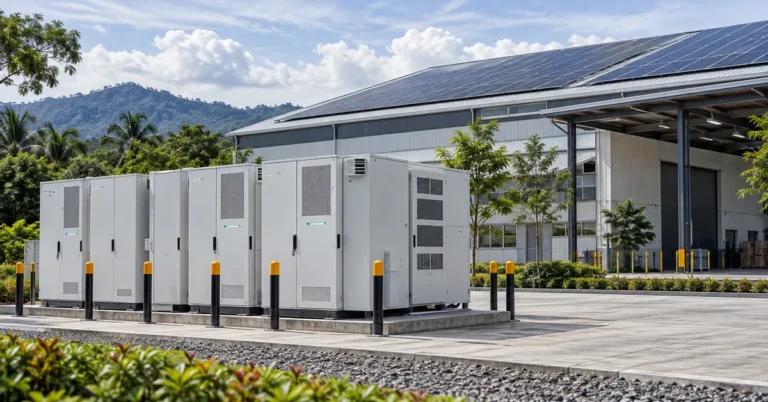
However, a suitable BESS system can store electricity for later use, potentially benefiting households with substantial evening demand.
Whether storage makes financial sense depends on battery costs, usable capacity, charging losses and the value of electricity shifted to nighttime consumption.
Backup power must also be designed specifically for that purpose. Installing a battery does not automatically guarantee uninterrupted power during a blackout.
What Should Homeowners Prepare Before Applying?
Having the right documents ready can make the technical assessment and application process easier.
A useful starting checklist includes:
Recent TNB electricity bills: Preferably 12 months to understand consumption patterns.
Electrical supply information: Confirm whether the property uses single-phase or three-phase supply.
Property details: Roof type, available space, shading and building condition.
Applicant information: Identification and TNB account details.
Technical drawings: Prepared or endorsed by the appropriate qualified professionals.
Connection assessment: CCC approval where the proposed capacity requires it.
SEDA requires applications through the official eATAP system with the involvement of an appointed Registered PV Service Provider.
Following the relevant programme approval and installation stages, TNB coordinates the necessary metering and contractual requirements.
For homeowners whose solar proposal involves more complicated electrical or structural conditions, early technical assessment is particularly important.
Is Solar ATAP Right for Your Home?
Solar ATAP is worth considering when your household has suitable rooftop space, meaningful daytime electricity demand and plans to remain in the property long enough to benefit from the investment.
Start with your actual consumption, not the largest solar system that fits on the roof.
At EFS Group, we assess household electricity usage, roof conditions and technical requirements before recommending a suitable installation. Explore our Solar ATAP support to discuss eligibility, system design and application requirements.
If you are researching solar for a commercial building instead, our separate guide to the Solar ATAP program explains its business-specific requirements.
Sources
Frequently Asked Questions
What Does Solar ATAP Stand For?
Solar ATAP stands for Solar Accelerated Transition Action Programme. It allows eligible consumers in Peninsular Malaysia to generate rooftop solar electricity and receive qualifying export credits.
Can Homeowners Apply for Solar ATAP in Malaysia?
Yes. Eligible TNB domestic consumers can apply, subject to property, electrical, connection and programme requirements.
What Is the Solar ATAP Capacity Limit for Homes?
The standard limits are 5 kW for single-phase and 15 kW for three-phase homes. Larger installations require additional connection assessment.
Do Solar ATAP Credits Expire?
Yes. Unused export credits cannot be carried forward to the next billing period.
How Long Does Solar ATAP Last?
The programme contract runs for up to 10 years. Afterward, the solar system may continue operating for self-consumption, subject to applicable requirements.
Is the SuRIA Home Rebate Guaranteed?
No. The rebate is subject to eligibility, available allocation, commissioning deadlines and official programme conditions.