Key Takeaways
- Residential solar panel installation in Malaysia commonly costs around RM15,000 to RM45,000, depending on system size, equipment and installation requirements.
- A complete solar quotation should cover panels, inverters, mounting structures, wiring, installation, testing and commissioning.
- Roof conditions, electrical upgrades and additional equipment can increase the final installation cost.
- The cheapest quotation may exclude essential services, warranties or additional installation work.
- Comparing quotations with the same system specifications and installation scope helps homeowners make informed decisions.
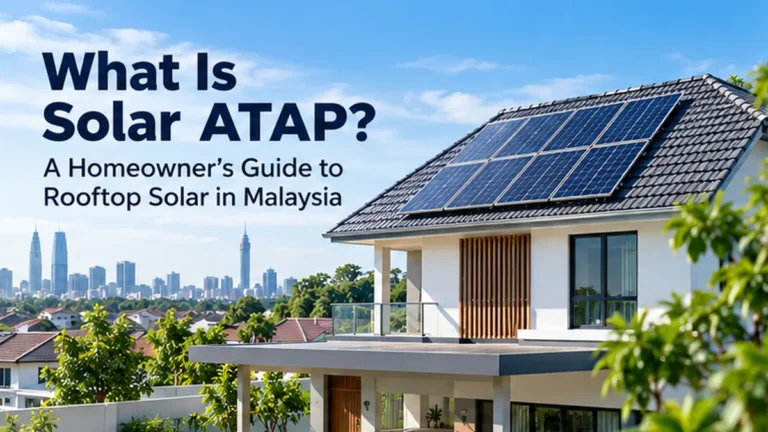
In 2026, a complete residential solar panel installation generally costs around RM15,000 to RM45,000, although smaller or more complex installations may fall outside this range.
However, solar panel price Malaysia estimates can be misleading when they refer only to panels rather than a complete working system.
A solar PV installation involves several components, including an inverter, mounting structure, electrical protection equipment, wiring and professional installation.
Before choosing a solar provider, homeowners should understand what they are paying for, which services are included and what additional expenses may arise. So, let’s talk about it!
Note: The indicative residential prices in this article are based on published 2026 market estimates, not official EFS Group quotations.
How Much Does Solar Panel Installation Cost in Malaysia?
The total cost of solar panel installation in Malaysia depends primarily on system capacity, equipment selection and property conditions.
A larger system requires more solar panels, additional mounting materials and greater installation capacity.
However, installation costs do not increase proportionately with system size. Smaller systems may have a higher cost per kilowatt-peak (kWp) because fixed expenses are distributed across fewer panels.
Solar System Size | Indicative Installed Cost | Typical Residential Application |
3–4 kWp | RM12,000–RM20,000 | Smaller landed homes |
5–6 kWp | RM18,000–RM28,000 | Terrace houses |
7–8 kWp | RM24,000–RM35,000 | Larger terrace or semi-detached homes |
9–10 kWp | RM30,000–RM42,000 | Larger semi-detached or detached homes |
11–12 kWp | RM35,000–RM50,000+ | Larger homes with higher electricity usage |
Note: These are indicative 2026 market estimates, not official EFS Group quotations.
The appropriate system size also depends on the property’s electrical supply and applicable solar programme requirements.
Under Solar ATAP, domestic systems can be installed up to 5 kW for single-phase connections or 15 kW for three-phase connections without a Connection Confirmation Check (CCC).
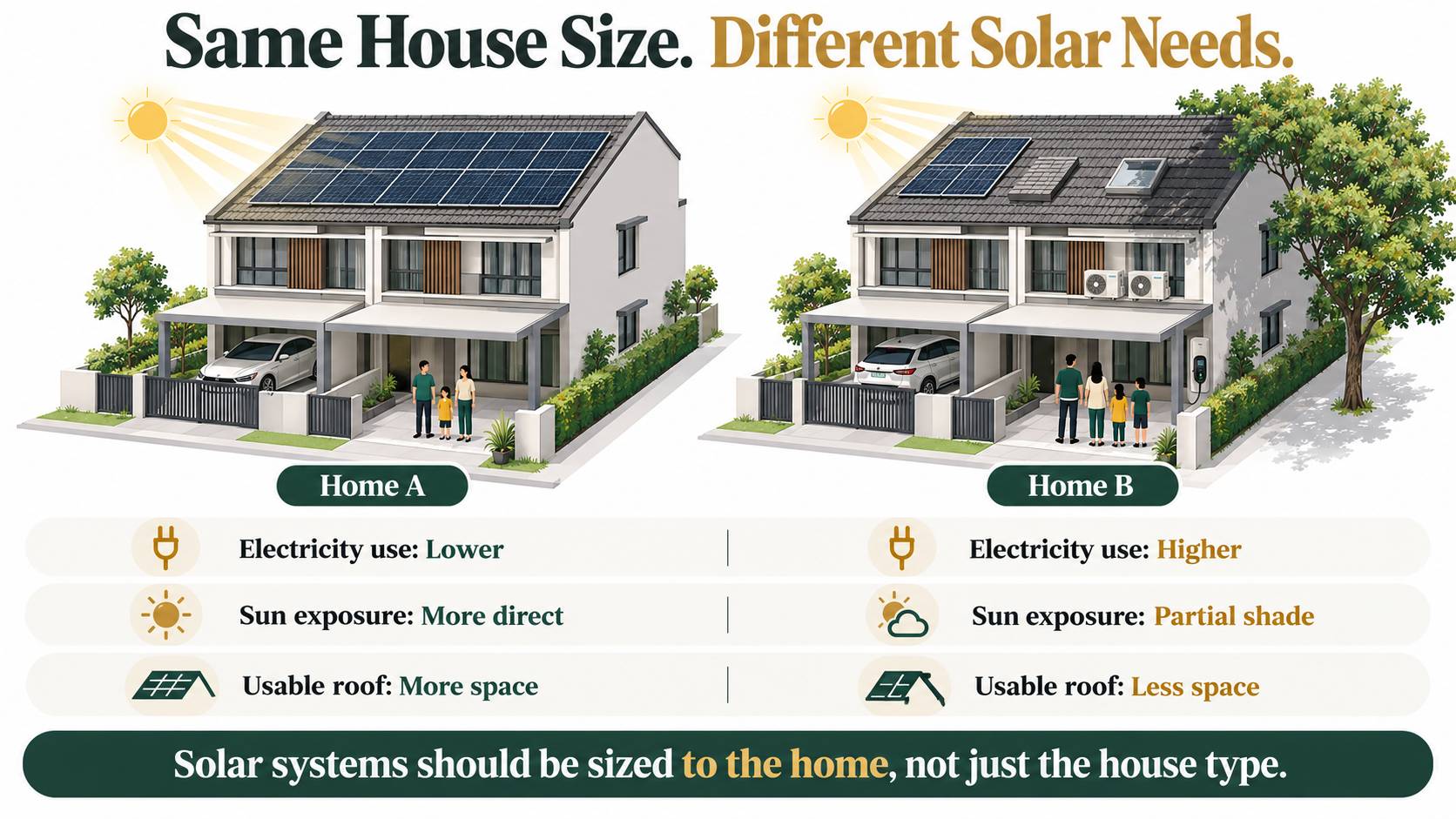
For example, two terrace houses may require different systems because of differences in electricity consumption, roof orientation and available installation space.
EFS Group provides residential solar installation services, including site assessment, system design, equipment procurement and professional installation tailored to individual properties.
What Is Included in a Complete Solar Panel Installation Quote?
A complete solar quotation should clearly distinguish between equipment supply and the full cost of delivering a functioning solar PV system.
Here are the main components homeowners should expect to see.
1. Solar PV Panels
Solar panels convert sunlight into direct-current electricity.
Their cost depends on several factors:
- Panel manufacturer and model
- Rated power output and efficiency
- Product and performance warranties
- Number of panels required
- Applicable product certifications
Higher-efficiency panels may be useful for properties with limited roof space, but the cheapest or most expensive panel is not automatically the best choice.
Ask for the exact brand, model, wattage and quantity instead of accepting descriptions such as “premium solar panels”.
2. Solar Inverter
The inverter converts electricity generated by solar panels into alternating-current electricity that household appliances can use.
Common options include:
- String inverters: Frequently used in standard residential installations.
- Microinverters: Provide panel-level conversion and may suit certain roof layouts.
- Hybrid inverters: Designed to support compatible battery storage configurations.
Inverter selection affects the system design, monitoring capabilities and potential future upgrades.
A quotation should specify the inverter brand, model, rated output, warranty and whether monitoring equipment is included.
3. Mounting Structure and Roof Installation
Solar panels require secure mounting systems suitable for the property’s roof.
Installation requirements vary according to:
- Roof material and condition
- Roof angle and orientation
- Building height
- Available installation space
- Structural capacity
- Waterproofing requirements
For example, a straightforward installation on a suitable metal roof may involve different labour and mounting requirements from an installation on an older tiled roof.
If roof repairs, reinforcement or specialised access equipment are necessary, these expenses should be identified before the project proceeds.
4. Electrical Equipment and Wiring
A working solar system requires more than panels and an inverter.
The electrical installation may include:
- DC and AC cabling
- Isolators and protection devices
- Earthing and bonding
- Surge protection
- Distribution board connections
- Monitoring and communication equipment
The exact configuration depends on the approved system design and applicable electrical requirements.
Homeowners should confirm that essential electrical protection and connection work is included in the quoted price.
5. Engineering, Installation and Commissioning
Professional installation includes technical work performed before and after the equipment is mounted.
Typical activities include:
- Site inspection and technical assessment
- Solar PV system design
- Equipment procurement
- Mounting and electrical installation
- Inspection and system testing
- Commissioning and operational handover
Depending on the applicable scheme, the project may also require documentation, submissions, approvals and utility coordination.
These activities should be included or clearly identified as separate charges.
EFS Group’s solar EPCC solutions cover engineering, procurement, construction and commissioning, helping customers manage the installation process through an integrated project approach.
What Additional Costs Might Be Excluded From a Solar Quote?
Not every installation can be completed using a standard package.
Certain property conditions may require additional work that is excluded from the initial quotation.
Potential Additional Cost | When It May Apply |
Roof repairs or reinforcement | Existing roof cannot safely support the proposed installation |
Distribution board upgrades | Electrical infrastructure requires modification |
Extended electrical cabling | Inverter or connection point is far from the panels |
Specialised scaffolding or access | Property height or roof access creates additional requirements |
Battery energy storage | Homeowner wants compatible energy storage or backup functionality |
Additional monitoring equipment | Enhanced monitoring features are requested |
Approval or utility-related fees | Applicable procedures are not included in the base package |
Again, these items do not apply to every property but dentifying them early helps prevent unexpected expenses after a quotation has been accepted.
Always ask your solar installer to provide two separate lists: what is included in the quoted price and what is explicitly excluded.
How to Compare Two Solar Panel Quotations Fairly
For example, imagine a Kuala Lumpur homeowner receiving two quotations for a 6 kWp residential solar system.
One costs RM20,000, while the other costs RM24,000.
At first glance, the cheaper quotation appears more attractive. However, the second quotation may include services or equipment omitted from the first.
Example: Comparing Two Residential Solar Quotes
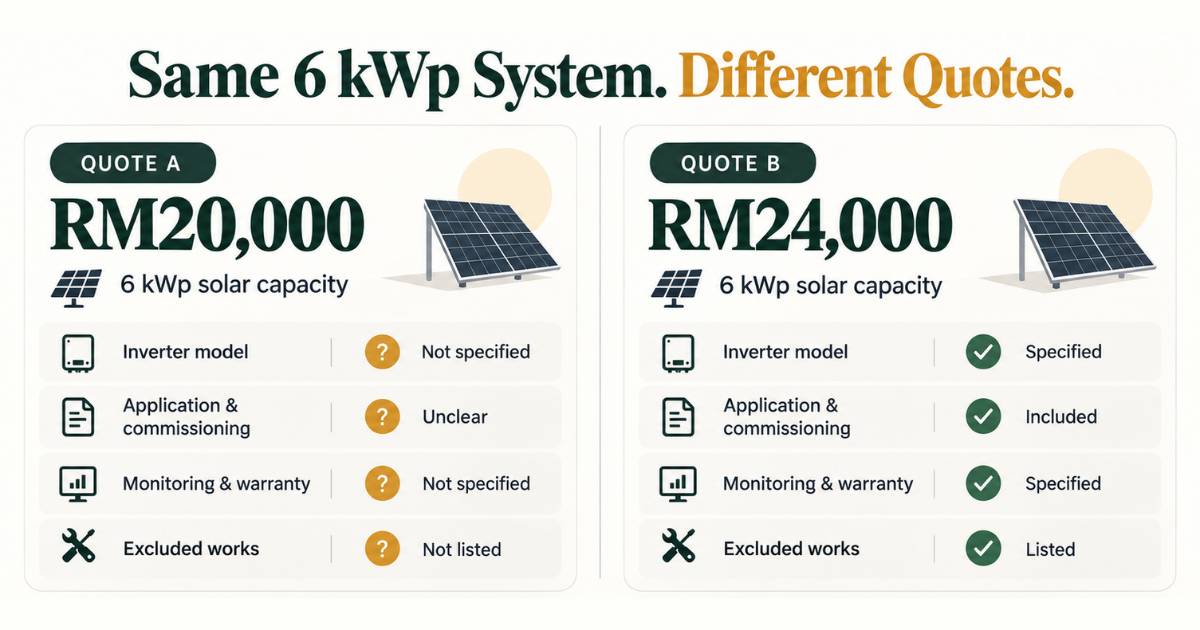
The RM4,000 difference does not necessarily mean Quote B offers better value but it DOES mean the buyer needs more information before deciding.
Calculate the Installed Cost Per kWp
One useful comparison metric is the installed cost per kilowatt-peak.
Installed cost per kWp = Total quoted system price ÷ Installed solar capacity (kWp)
Using the examples above:
- Quote A: RM20,000 ÷ 6 kWp = approximately RM3,333/kWp
- Quote B: RM24,000 ÷ 6 kWp = RM4,000/kWp
However, this comparison is meaningful only when both quotations cover equivalent installation work.
Confirm whether the total includes applicable taxes, installation services, testing, commissioning and other required charges.
Also compare the solar panel capacity in kWp separately from the inverter’s rated AC capacity in kW.
What Are the Ongoing Costs After Installing Solar Panels?
Solar panels are long-term equipment, so the initial installation price is not the only expense homeowners should consider.
Ongoing costs include:
- Routine inspections: Checking panels, mounting structures, electrical connections and system condition.
- Cleaning: Removing dirt or debris when necessary.
- Inverter maintenance or replacement: Depending on equipment condition, warranty coverage and service life.
- Repairs: Addressing damaged components or electrical faults.
- Monitoring: Identifying unexpected changes in system performance.
The frequency and cost of these services depend on the installation and maintenance arrangement.
Homeowners should review the equipment warranties and confirm whether scheduled maintenance is included in the original package.
EFS Group offers solar maintenance services covering system monitoring, inspection and preventive maintenance to support long-term solar PV performance.
What Should You Prepare Before Requesting a Solar Quotation?
Providing the right information helps solar installers prepare a more accurate proposal.
Before contacting a provider, prepare the following:
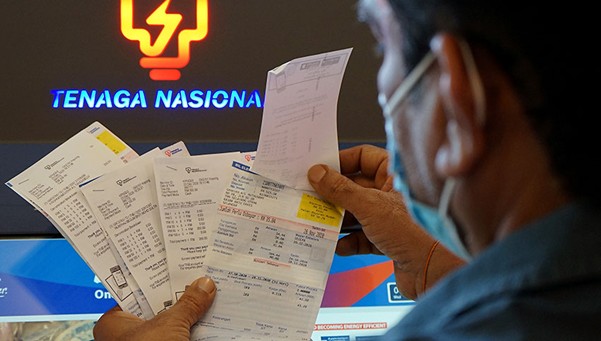
- Recent electricity bills: Ideally covering several months to show consumption patterns.
- Property location: Including whether the installation is in Peninsular Malaysia, Sabah or Sarawak.
- Roof information: Roof type, approximate size, age and known structural issues.
- Property photographs: Showing the roof and potential installation areas.
- Electrical supply details: Including single-phase or three-phase supply, if known.
- Future requirements: Such as electric vehicle charging, increased household consumption or battery storage.
You do not need to calculate the ideal solar system size yourself before contacting an installer.
A qualified provider should assess your requirements and recommend an appropriate configuration.
Compare the Complete Solar Installation Cost, Not Just the Panel Price
Solar panel installation in Malaysia generally requires a substantial upfront investment, with costs varying according to system size, equipment selection and property conditions.
For homeowners, the most important consideration when comparing prices is whether each quotation covers the same complete installation scope.
A quotation should clearly explain what is included, what may cost extra and what support is available after commissioning.
With over a decade of renewable energy experience, EFS Group provides end-to-end solar PV solutions, from site assessment and system design to installation and long-term maintenance.
Planning to install solar panels? Contact EFS Group to arrange a site assessment and request a detailed quotation tailored to your property, electricity usage and installation requirements.
Sources
Sustainable Energy Development Authority (SEDA) Malaysia. Solar ATAP Guidelines and Procedures. 2025–2026. https://www.seda.gov.my/reportal/atap/solar-atap-guidelines/
Suruhanjaya Tenaga (Energy Commission). Guidelines for Solar Accelerated Transition Action Programme in Peninsular Malaysia. 30 December 2025. https://www.st.gov.my/resources/guidelines-solar-accelerated-transition-action-programme-peninsular-malaysia
Sustainable Energy Development Authority (SEDA) Malaysia. Home Owner’s Guideline for Solar PV. https://www.seda.gov.my/download/seda-guidelines/home-owners-guideline-for-solar-pv/
Sustainable Energy Development Authority (SEDA) Malaysia. Solar ATAP General Information. 2026. https://www.seda.gov.my/reportal/atap/solaratap-general/
U.S. Department of Energy. Power Electronics and Balance of System Hardware Technologies. https://www.energy.gov/cmei/systems/power-electronics-and-balance-system-hardware-technologies
U.S. Department of Energy. Decisions, Decisions: Choosing a Solar Installer. 2021. https://www.energy.gov/cmei/systems/articles/decisions-decisions-choosing-solar-installer
National Renewable Energy Laboratory (NREL). Annual Technology Baseline: Residential PV. 2024. https://atb.nrel.gov/electricity/2024/residential_pv
International Renewable Energy Agency (IRENA). Renewable Power Generation Costs in 2025. July 2026. https://www.irena.org/Publications/2026/Jul/Renewable-Power-Generation-Costs-in-2025
Frequently Asked Questions About Solar Panel Cost in Malaysia
How Much Does It Cost to Install Solar Panels in Malaysia?
Residential solar panel installation in Malaysia commonly costs around RM15,000 to RM45,000, although prices vary depending on system size, equipment, roof conditions and installation complexity.
Does the Solar Panel Price Include Installation?
Not always. Some advertised prices refer to solar panels or equipment packages only. A complete quotation should identify the costs of mounting structures, inverters, wiring, labour, electrical protection, testing, commissioning and relevant application services.
Are There Hidden Costs When Installing Solar Panels?
Additional expenses may arise from roof repairs, structural reinforcement, electrical upgrades, specialised access equipment or extended cabling. These are not necessarily hidden charges, but homeowners should request a written list of exclusions before approving the project.
Is a Battery Included in a Standard Solar Installation?
Generally, standard grid-connected residential solar packages do not automatically include battery storage. A Battery Energy Storage System requires additional equipment, compatible controls and appropriate system design.
Do Solar Panels Require Maintenance?
Yes. Solar PV systems benefit from periodic inspection, performance monitoring and cleaning when required. Inverters and other electrical components may also need servicing or eventual replacement.
Can I Get an Accurate Solar Panel Quote Without a Site Visit?
An installer may provide a preliminary estimate using electricity bills, property photographs and roof information. However, the final quotation should account for roof suitability, electrical infrastructure, installation access and other site-specific requirements. A technical assessment helps confirm the actual installation scope and cost.