Key Takeaways
- Solar energy is renewable energy from sunlight that can be converted into electricity or heat, depending on the technology used.
- Malaysia receives approximately 1,726 kWh/m² of solar irradiation annually, equivalent to around 4.7 kWh/m² per day.
- Battery storage can save electricity generated by solar PV for later use, such as after sunset.
- According to IEA PVPS, Malaysia had approximately 5.78 GW of cumulative solar PV capacity under the LSS, FiT and NEM schemes by the end of 2025.
- Solar suitability depends on energy demand, site conditions and when electricity is needed.
Solar energy is sunlight harnessed for electricity or heat. While it sounds simple (and it can be), for Malaysian homes and businesses, the question is which technology fits the energy they actually use.
Most people are familiar with solar panels in Malaysia but not every solar technology produces electricity, and not every property benefits from solar energy in the same way.
In this guide, we’ll explore:
- The different types of solar energy and their uses.
- Which solar technologies suit different needs in Malaysia.
- The benefits and limitations of solar energy.
Let’s get to it.
What Are the Main Types of Solar Energy?
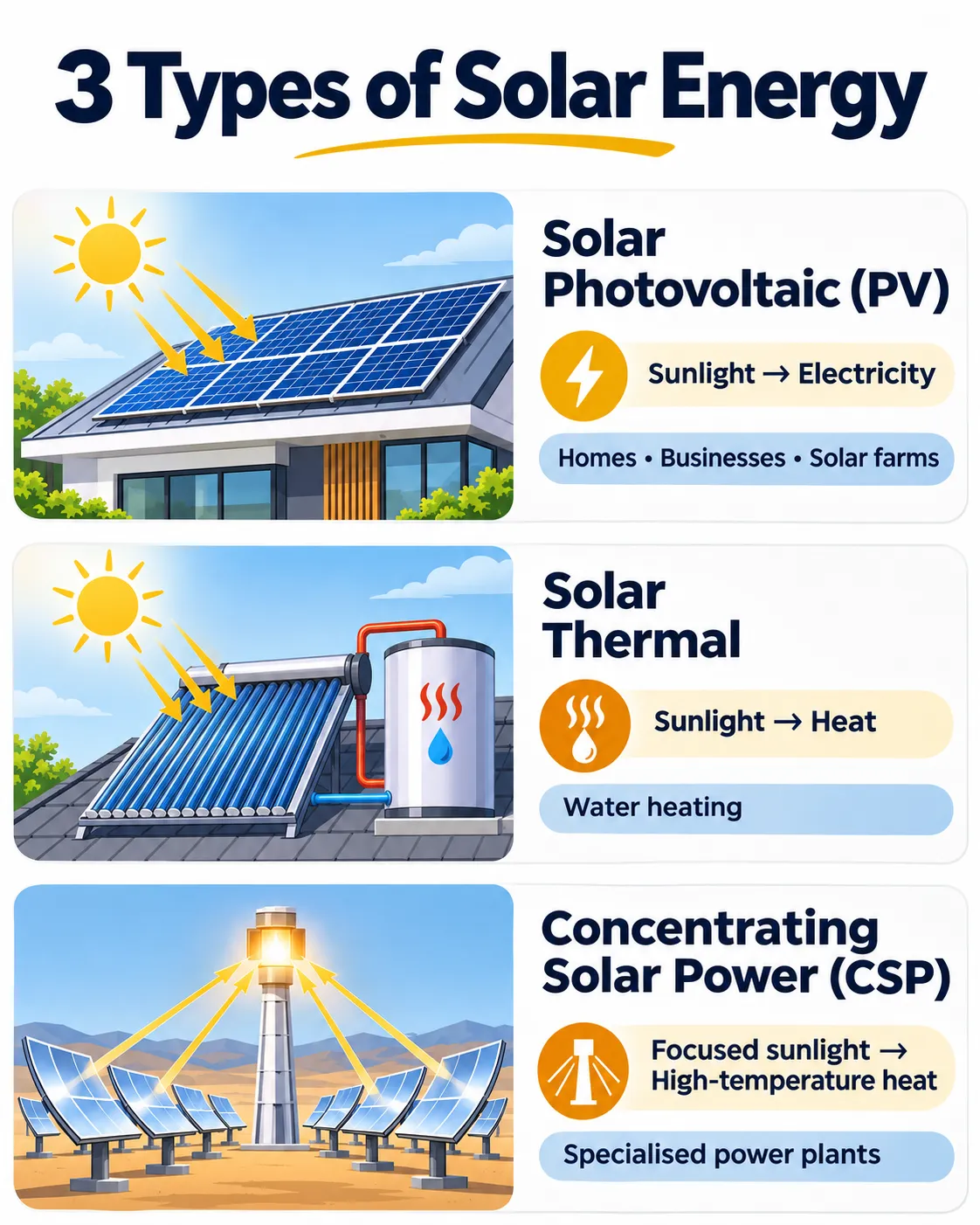
Three main technologies harness sunlight for different purposes:
1. Solar Photovoltaic (PV)
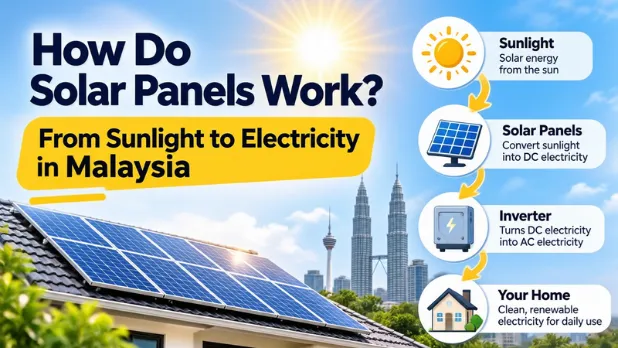
Solar PV converts sunlight directly into electricity through photovoltaic cells.
It is the technology commonly associated with rooftop solar panels and ground-mounted solar farms.
Solar PV systems can supply electricity during daylight hours, reducing the amount a property needs to purchase from the grid.
2. Solar Thermal Energy
Solar thermal systems capture heat from sunlight rather than directly generating electricity.
One familiar example is a solar water heater.
For example, a hotel with substantial hot water requirements may assess solar thermal technology.
3. Concentrating Solar Power (CSP)
Concentrating solar power uses mirrors to focus sunlight onto receivers that generate high-temperature heat.
This heat can be used to produce electricity or support specialised industrial processes.
CSP is primarily associated with large-scale facilities requiring suitable land and strong direct sunlight. However, Malaysia’s frequent cloud cover makes conventional solar PV more straightforward for most local electricity-generation applications.
For those wondering how to plan your solar installation for your business, we have a whole article on it!
Which Solar Energy Technology Should You Choose?
The right technology depends on whether the property needs electricity, heat or the ability to store energy.
Technology | Energy Function | Suitable Application | Limitation in Malaysia |
Solar PV | Generates electricity | Homes, offices, factories and solar farms | Output varies with sunlight and weather |
Solar thermal | Produces usable heat | Water heating and selected industrial processes | Requires consistent heating demand |
Concentrating solar power | Produces concentrated heat | Specialised large-scale facilities | Cloud cover limits direct sunlight |
Battery storage | Stores electricity | Nighttime consumption and backup | Limited capacity and additional investment |
Which Solar Energy Technology Is Best for Different Needs?
Generally, each technology serves a different purpose:
For homes and residential properties
Solar PV is usually the most practical choice for generating electricity to power household appliances.
For offices, factories and commercial buildings
Solar PV can help reduce purchased grid electricity, particularly when electricity consumption is high during daylight hours.
For water heating
Solar thermal systems are more suitable for properties such as hotels and households that require regular hot water.
For specialised large-scale power generation
Concentrating solar power may be suitable where strong direct sunlight and appropriate infrastructure are available.
For nighttime electricity use or backup
Battery storage can complement solar PV, provided the system is designed for the intended purpose.
Basically, if your main goal is to generate electricity for a Malaysian home or business, solar PV is the first technology worth considering.
How Much Solar Energy Does Malaysia Receive?
Malaysia’s geographical position near the equator provides relatively consistent daylight throughout the year.
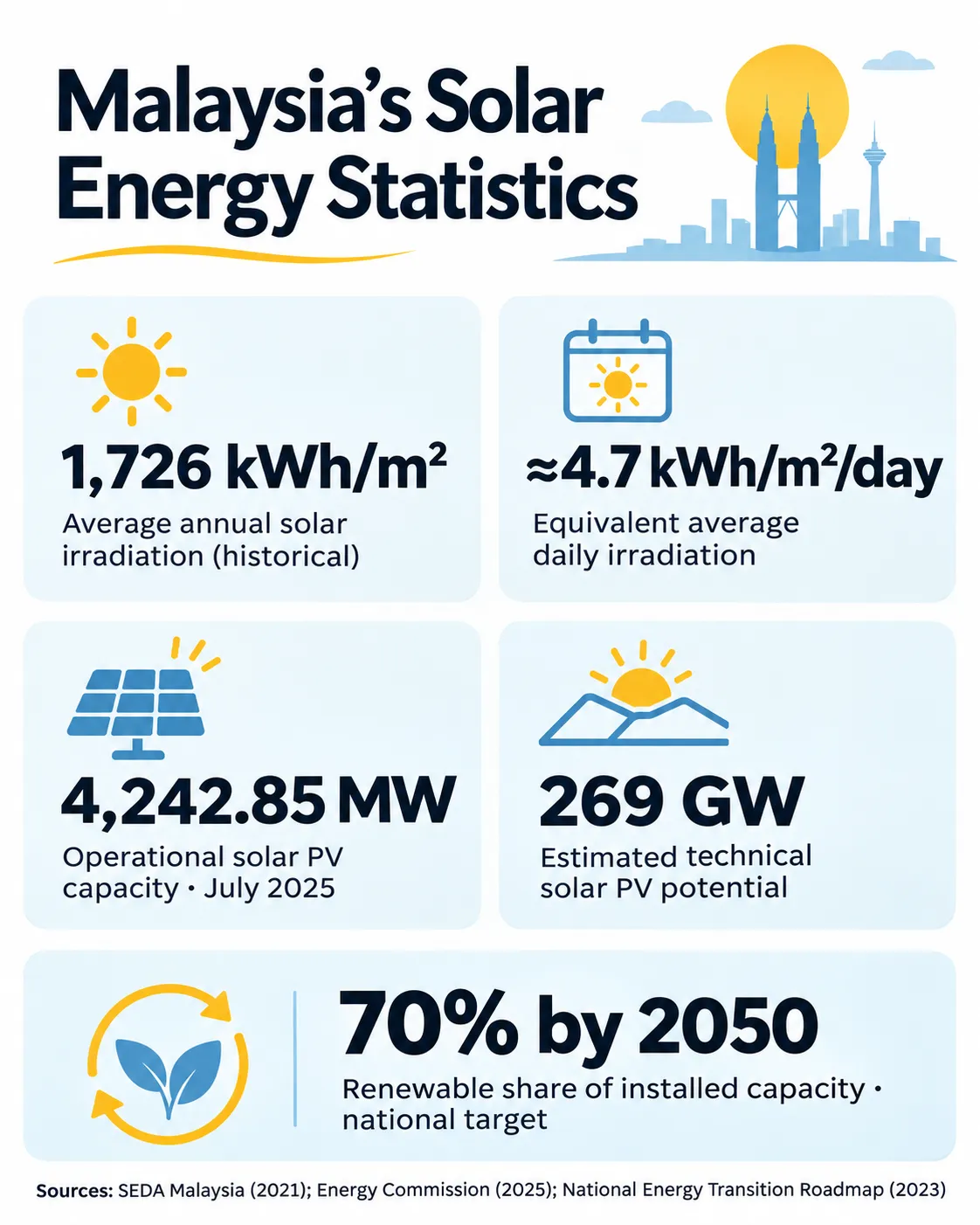
But what does this mean in practice?
As an example, SEDA Malaysia’s low-carbon office features a 16 kWp solar PV system with an estimated annual electricity generation of 19,200 kWh.
To put that into perspective, this is equivalent to the annual electricity consumption of approximately five households using 300 kWh per month each.
However, solar irradiation measures incoming sunlight, not the electricity a solar panel produces. Actual generation depends on equipment efficiency, weather, temperature, shading and system conditions.
Where Is Solar Energy Used in Malaysia?
Malaysia has considerable rooftop solar potential, especially across residential, commercial and industrial buildings.
According to SEDA Malaysia’s Renewable Energy Roadmap, an assessment identified approximately 42 GW of rooftop solar PV resource availability across 4.6 million buildings and 43 university campuses.
So existing rooftops on large buildings are primed targets for generated power through solar, but they are also other users too.
Residential Solar Energy
Homeowners can use rooftop solar PV for daytime loads such as air-conditioning, refrigeration and home-office equipment.
For example, a landed home in Selangor with substantial daytime electricity consumption may use solar electricity directly while the panels are generating power.
However, a household consuming most of its electricity after sunset may still rely heavily on the grid.
Commercial Solar Energy
Offices, shopping centres and hotels often use electricity during daylight hours, when solar generation is available.
For suitable properties, commercial solar solutions can reduce grid electricity purchases and support sustainability objectives.
Industrial Solar Energy
Factories and industrial facilities may have substantial electricity requirements and large rooftop areas.
Solar PV can contribute electricity towards machinery, ventilation, lighting and other equipment.
Two factories with similar roofs may need different solar configurations if their operating hours differ.
Large-Scale Solar Energy
Large-scale solar farms generate electricity using extensive arrays of photovoltaic panels.
Rather than supplying electricity to just one property, these projects generally deliver electricity through approved grid-connected arrangements.
According to Malaysia’s Energy Commission, operational large-scale solar (LSS) capacity reached approximately 2,237 MW as of July 2025.
Developing large-scale solar projects involves land suitability, grid connections, engineering assessments and long-term operational planning.
What Are the Benefits of Solar Energy in Malaysia?
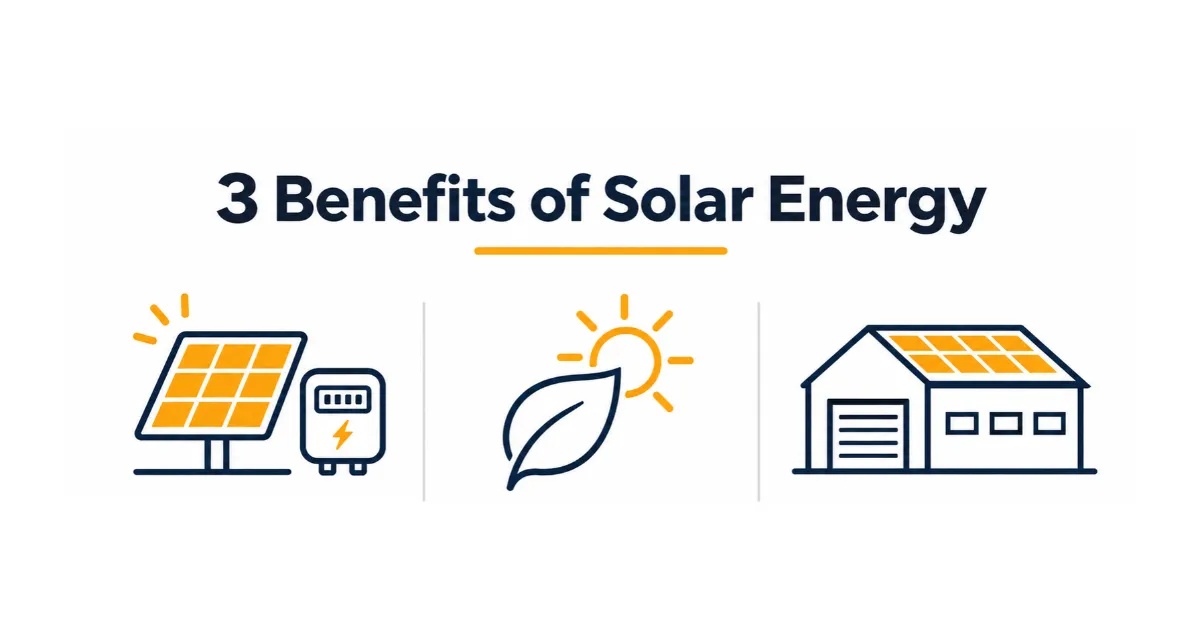
When solar PV suits the site, three benefits matter most:
Reduced Electricity Purchases
Solar PV can supply part of a building’s daytime electricity demand.
Lower Operational Carbon Emissions
Solar PV generates electricity without burning fossil fuels during operation.
Better Use of Available Rooftops
Suitable commercial and industrial rooftops can accommodate solar installations without requiring separate land.
What Are the Limitations of Solar Energy in Malaysia?
Malaysia’s sunlight is useful, but solar generation is intermittent and installation conditions still matter.
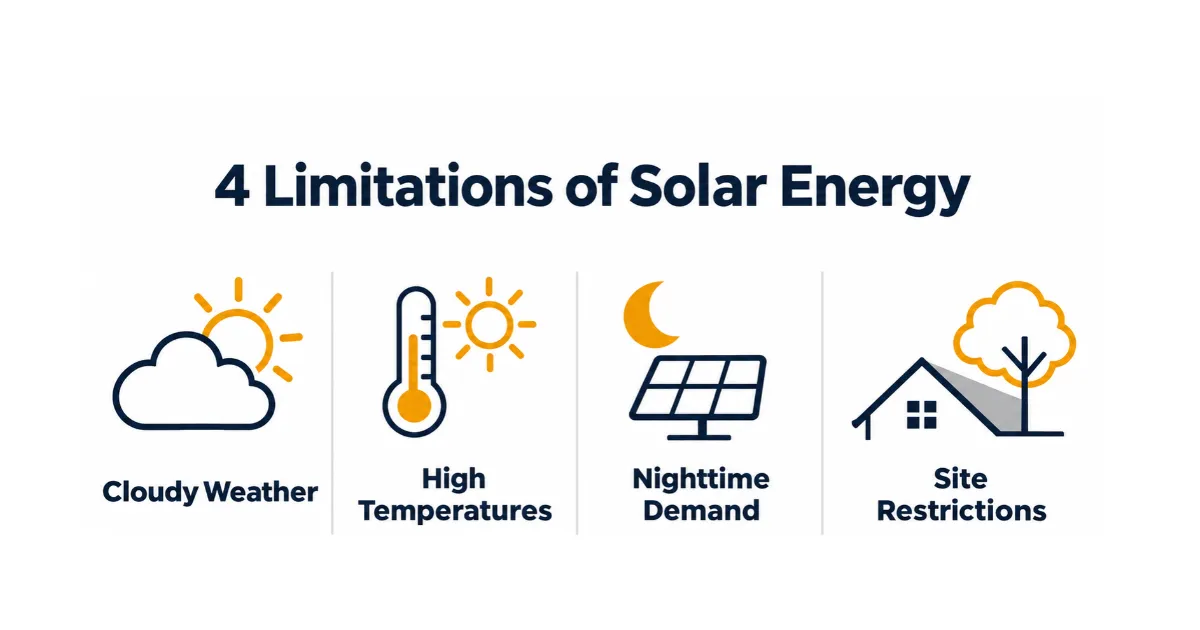
Weather and Monsoon Conditions
Solar PV can continue generating electricity during cloudy conditions, but output is generally reduced.
High Temperatures
Hotter panels do not necessarily generate more electricity; efficiency can fall as cell temperatures rise.
Nighttime Electricity Demand
Conventional solar PV does not generate electricity at night.
Roof and Land Restrictions
A site may have ample space but still be unsuitable because of shading, structural condition or electrical constraints.
Common considerations include:
- Insufficient roof structural capacity.
- Shading from nearby buildings or trees.
- Limited usable installation space.
- Existing roof deterioration.
- Electrical connection constraints.
Conclusion: Is Solar Energy Worth Considering in Malaysia?
Malaysia’s year-round sunlight and growing renewable energy infrastructure make solar PV a practical option for residential, commercial and industrial properties.
However, choosing the right solar technology depends on your property’s energy requirements, operating hours and site conditions.
With over a decade of renewable energy experience and more than 300 MWp of solar capacity delivered, EFS Group helps Malaysian homeowners and businesses make better use of solar energy.
Here’s why customers choose EFS Group:
- Proven Solar Expertise: Over 10 years of renewable energy experience and more than 300 MWp of solar capacity delivered across Malaysia and the region.
- End-to-End EPCC Services: Comprehensive support from engineering and procurement to construction, commissioning and long-term maintenance.
- Tailored Solar and Energy Storage Solutions: Solar PV and battery energy storage systems designed around your property’s electricity consumption, site conditions and operational needs.
Ready to make the most of Malaysia’s solar energy potential?
Contact EFS Group today to discuss your residential, commercial or industrial solar requirements and take the next step towards cleaner, more efficient electricity generation.
Sources:
- SEDA Malaysia – Malaysia Renewable Energy Roadmap (MyRER, 2021)
Supports Malaysia’s annual solar irradiation estimate of 1,726 kWh/m² and estimated 42 GW rooftop solar potential. - Energy Commission Malaysia – Renewable Energy Capacity (24 July 2025)
Supports the reported 4.24 GW of operational solar PV capacity as of July 2025. - Energy Commission Malaysia – Large-Scale Solar Capacity (July 2025)
Supports the reported 2,237 MW of operational LSS capacity as of July 2025. - IEA Photovoltaic Power Systems Programme – Country Updates 2025 (March 2026)
Supports Malaysia’s approximately 5.78 GW cumulative solar PV capacity under the LSS, FiT and NEM schemes by the end of 2025.
- International Renewable Energy Agency (IRENA) – Concentrating Solar Power (2013)
Explains CSP requirements, including strong direct solar irradiation and suitable locations.